“It's a crisis can't you see?” Poly Styrene - X-Ray Spex
Subject - Poly Styrene - Marianne Joan Elliott-Said - Arrived in this world 3rd July 1957 - Bromley, Greater London - Left this world 25th April 2011 East Sussex, England.
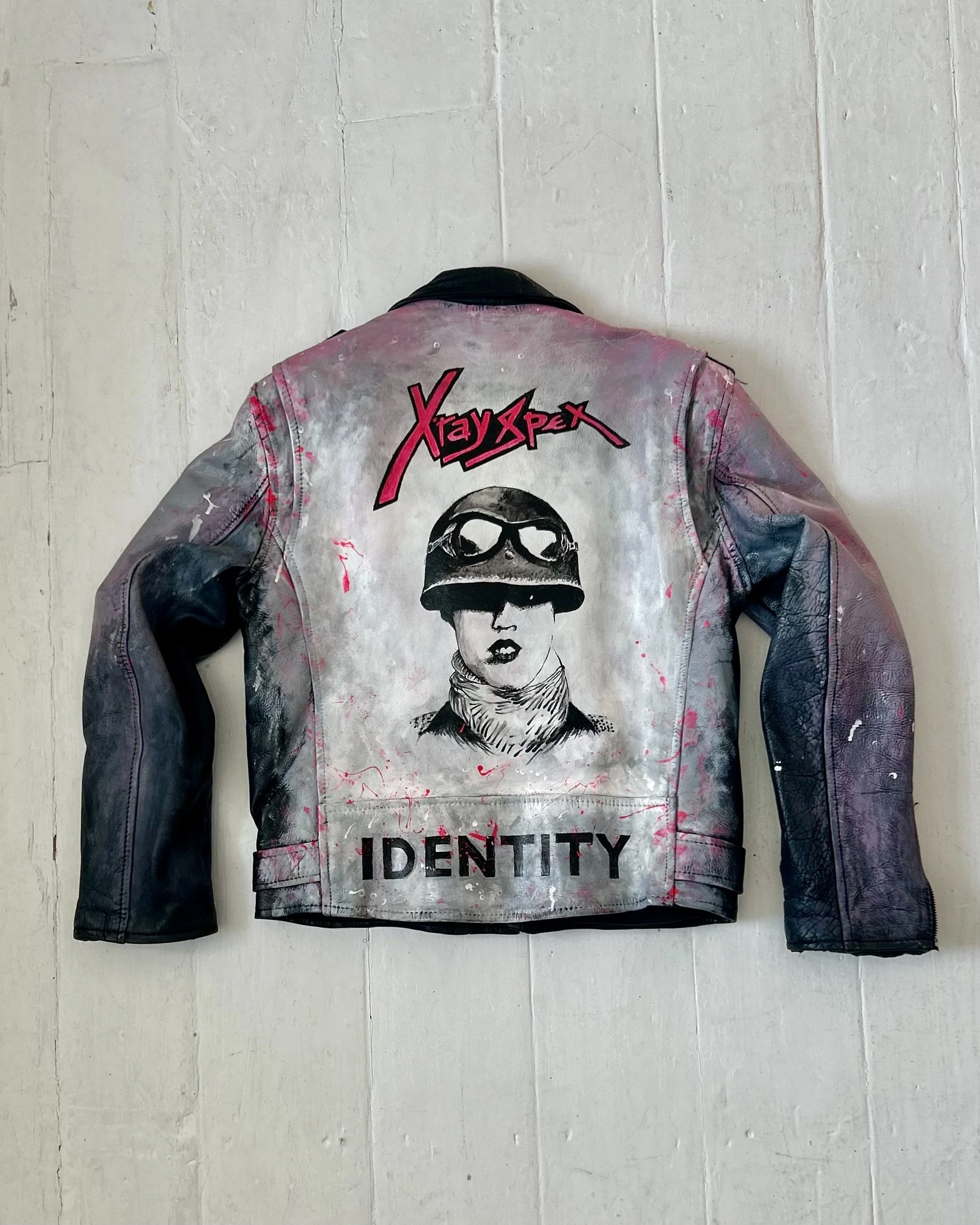
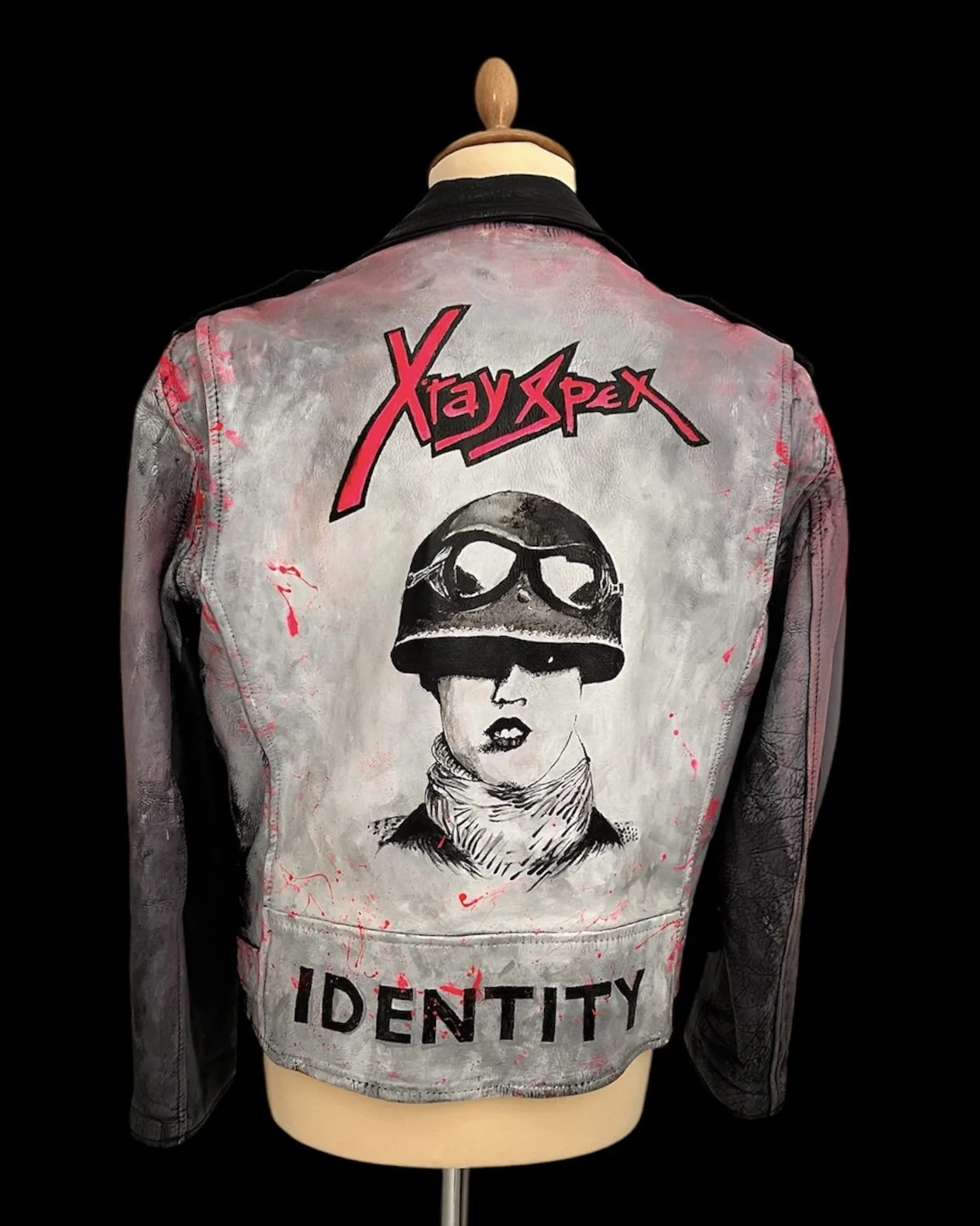
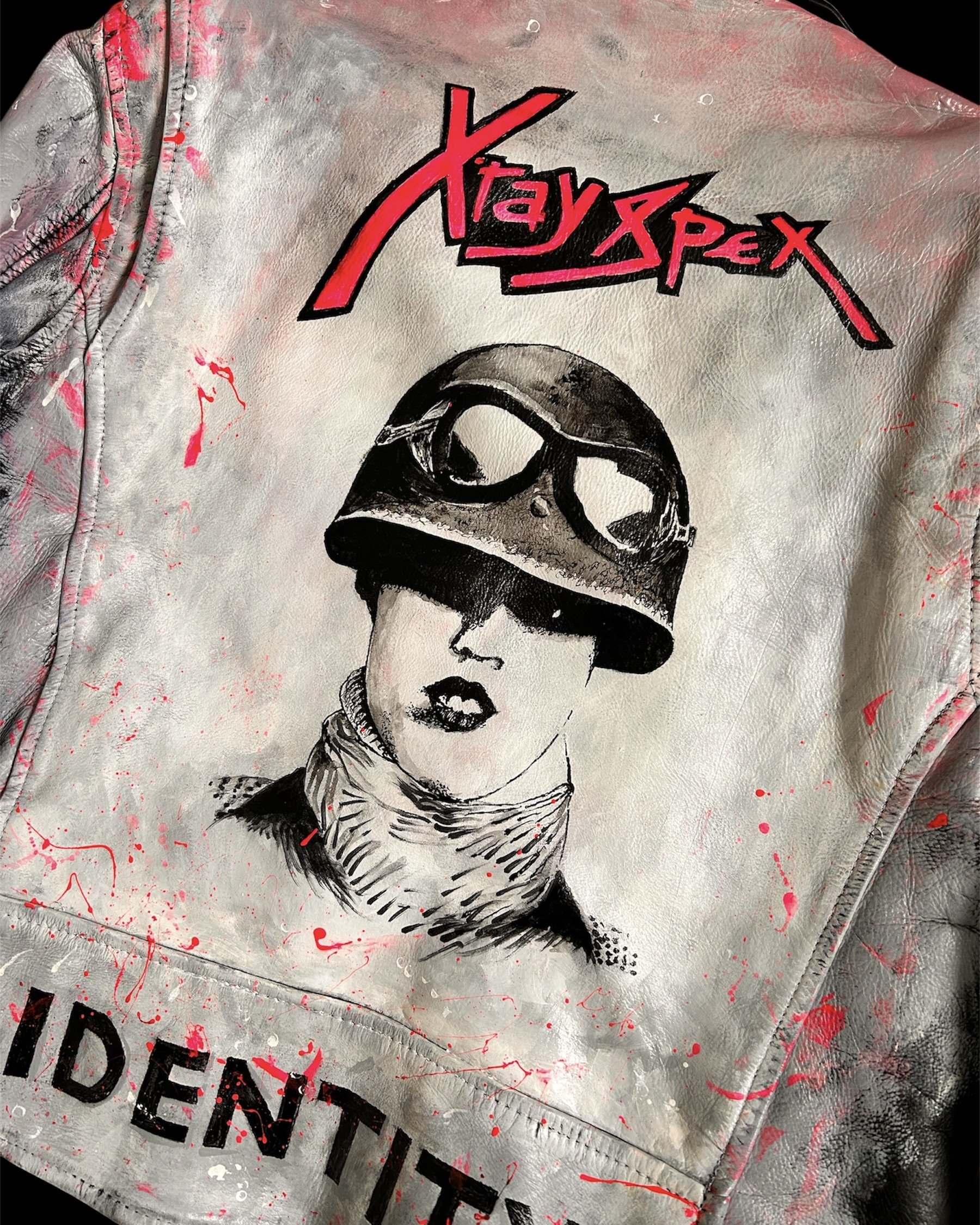
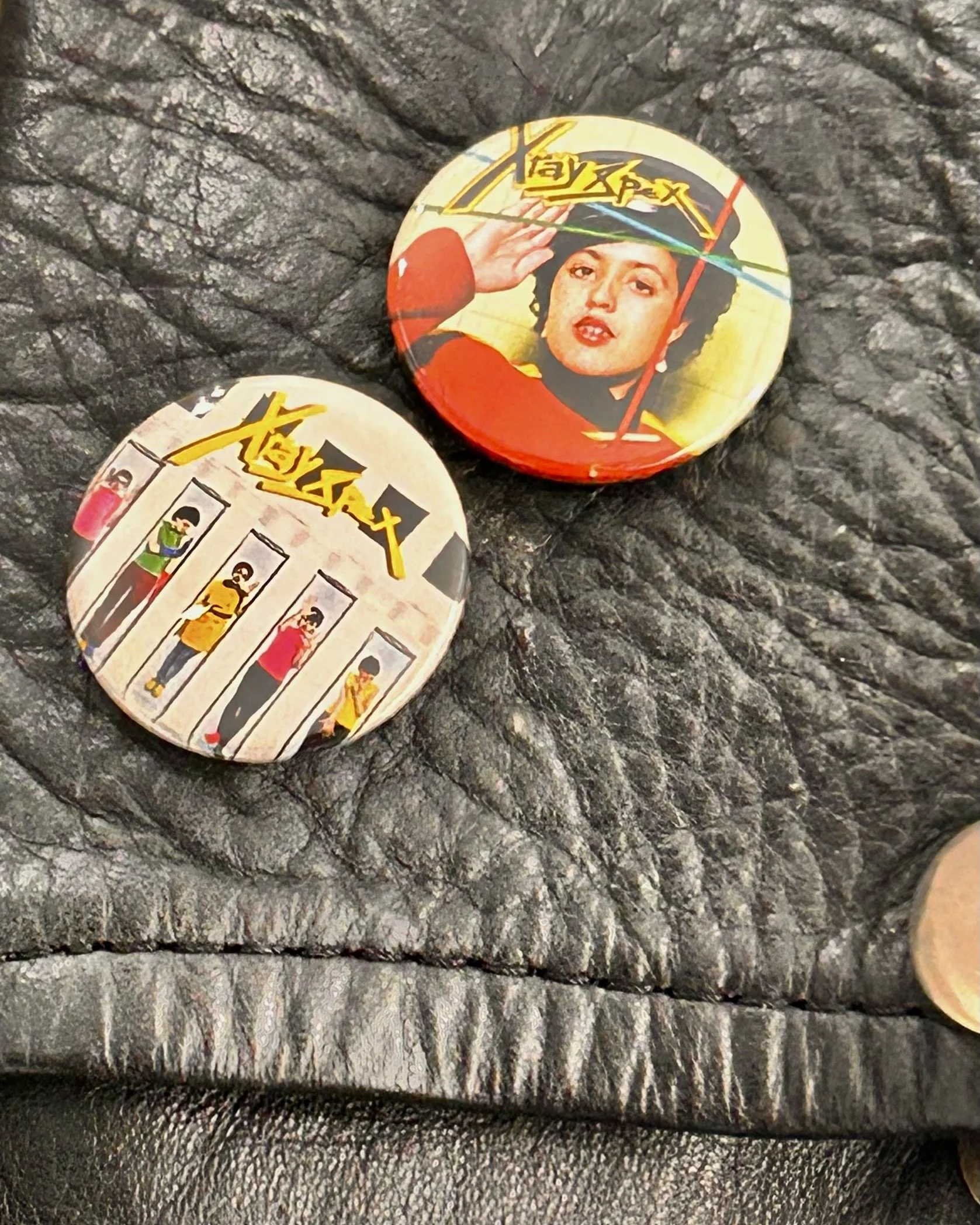
Vintage leather jacket - Acrylic leather paint, studs, detritus of life, classic vintage 1980’s button badges
Date created 2026
Sweepings from the studio floor. An ongoing series of hand-painted leather jackets celebrating women who broke boundaries, challenged convention, and inspired generations through their courage and creativity. Each piece is created as an original artwork — a tribute to individuality, rebellion, and fearless self-expression.
Poly rejected the idea that women in music had to be glamorous, sexually appealing, or conform to industry expectations. When X-Ray Spex emerged in 1977, she performed wearing braces, homemade clothing, and often little or no makeup—an intentional rejection of conventional female pop-star imagery.
She once said: "I wasn't trying to be a sex symbol."
Her message was that women should be valued for their ideas and creativity rather than their appearance.
Challenging objectification
Many X-Ray Spex songs critique how women are turned into products by advertising and consumer culture.
For example:
Identity questions how people lose themselves trying to fit society's expectations.
Plastic Bag and Art-I-Ficial criticize artificiality and consumerism.
Oh Bondage Up Yours! uses irony to attack social and cultural constraints placed on women.